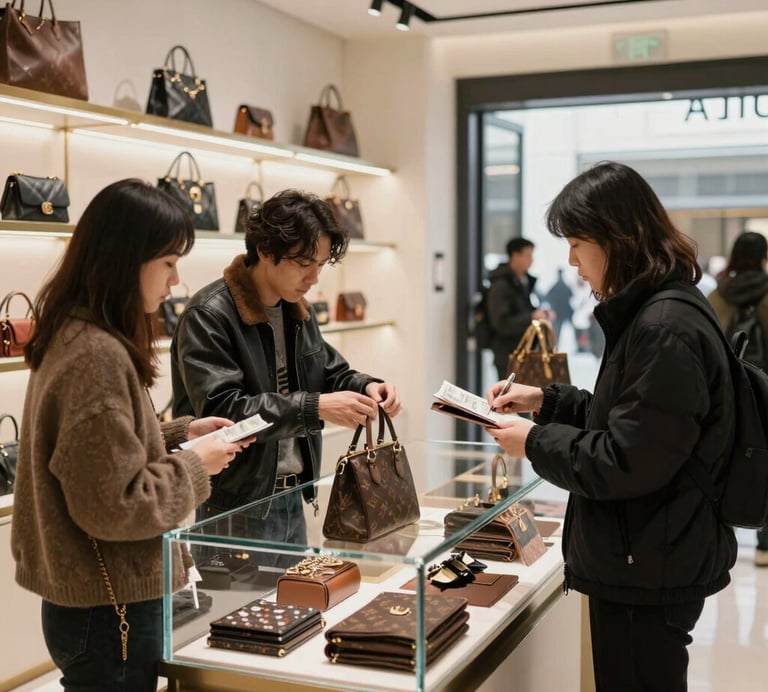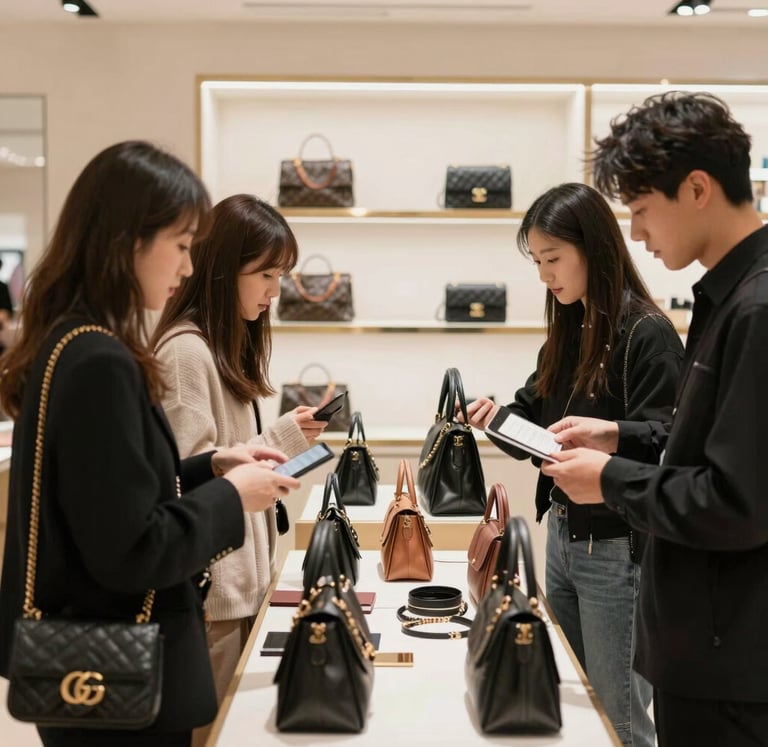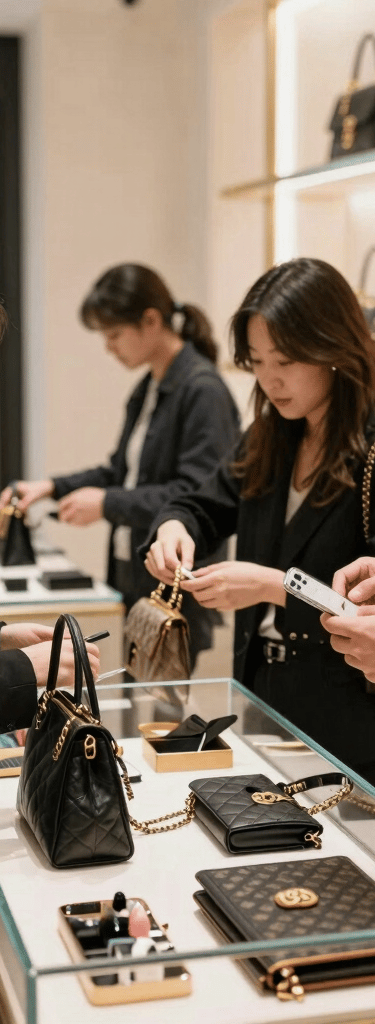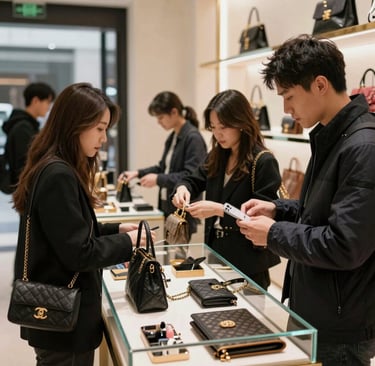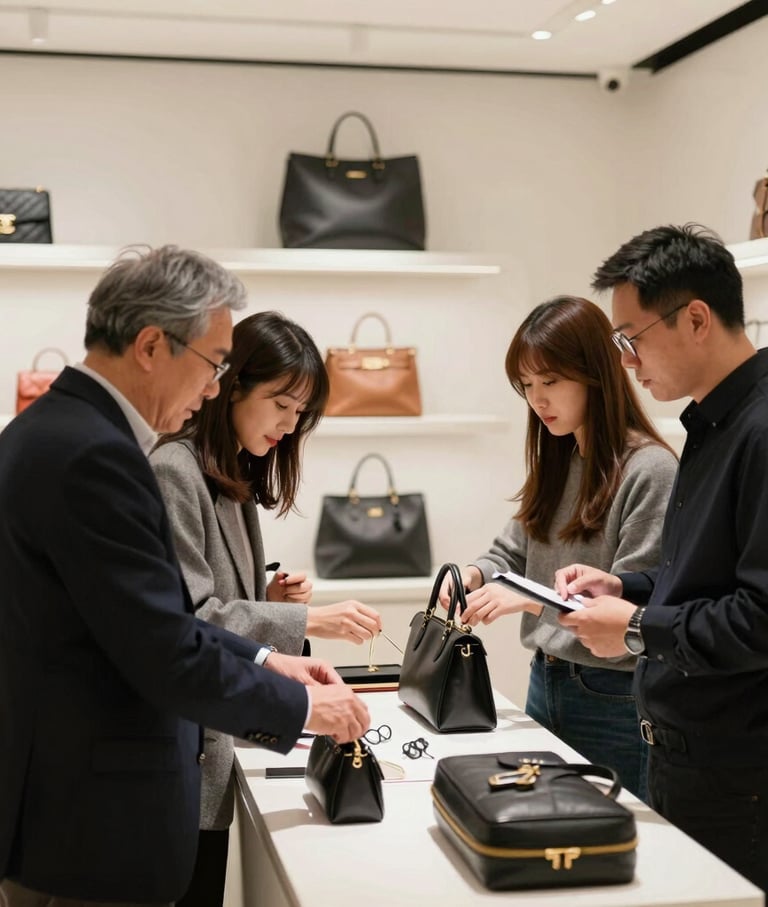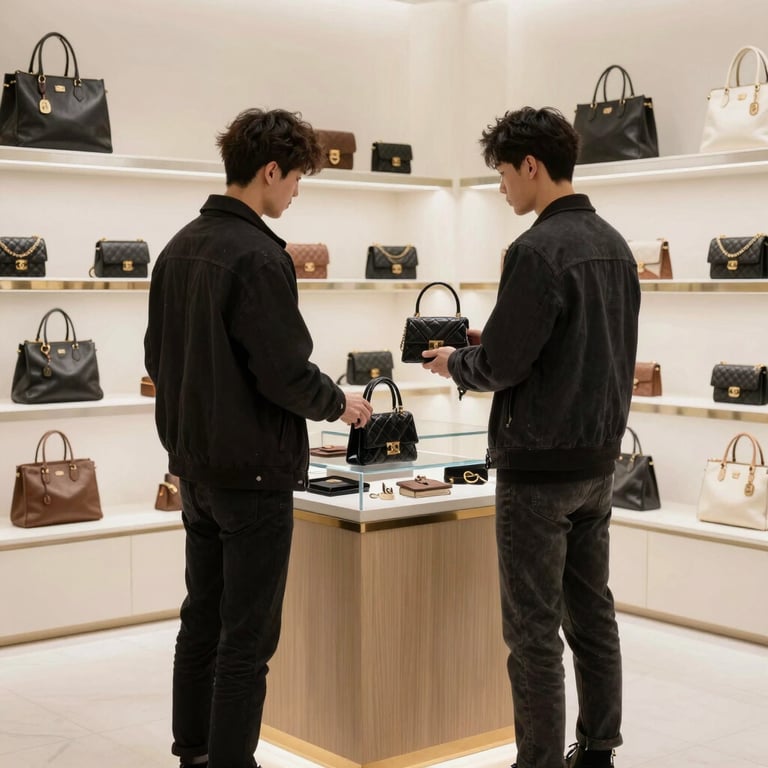
Why do people pay €10,000 for a bag?
Why do people pay €10,000 for a bag?
"If it fits your lifestyle, it probably also fits your credit card limit."
1. Warm-up Discussion
Discuss these questions in pairs or small groups:
What is the most expensive item you have ever bought? Was it worth it?
Why do you think luxury products are so expensive?
Do you think people buy expensive brands for quality or for status?
Would you ever spend a large amount of money on a designer product? Why or why not?
2. Vocabulary Exercise
Match the words (1–8) with their definitions (A–H):
Luxury
Brand
Status symbol
Craftsmanship
Demand
Exclusivity
Perception
Marketing
A. The skill used to make something by hand or with care
B. The way people think about something
C. Promotion of products to attract customers
D. A high-end product or lifestyle
E. The desire or need for a product
F. A sign that shows wealth or social position
G. The identity of a company or product
H. The quality of being rare or limited
Fill in the gaps using the words above:
High __________ often increases the price of luxury goods.
Strong __________ can make even simple products seem valuable.
Many luxury bags are seen as a __________.
The __________ of designer products is carefully controlled.
Good __________ is often used to justify high prices.
Global __________ for luxury goods continues to grow.
A strong __________ can increase customer loyalty.
Consumer __________ of luxury items varies across cultures.
3. Reading Text
Why do people pay €10,000 for a bag?
At first glance, spending €10,000 on a handbag may seem irrational. After all, a bag’s basic function is simple: to carry items. However, in the world of luxury goods, price is not only determined by function but also by perception, branding, and emotional value.
Luxury brands carefully build a powerful brand identity that goes far beyond the product itself. Through strategic marketing, they create a sense of exclusivity and prestige. Owning such a product is often seen as a status symbol, signaling wealth, success, or social position.
Another important factor is craftsmanship. Many luxury bags are handmade using high-quality materials and require hours of skilled labor. This level of detail and quality contributes to their high price. However, critics argue that even with excellent craftsmanship, the price still far exceeds production costs, suggesting that value is largely symbolic.
Exclusivity also plays a key role in pricing. Luxury brands often limit production, creating artificial demand and making products harder to obtain. This scarcity increases desirability, as people often want what is difficult to get. In this sense, the product becomes more than an object—it becomes an experience or achievement.
From a business perspective, luxury pricing is highly strategic. Companies are not simply selling a product; they are selling identity, emotion, and belonging. Customers are not only paying for materials, but also for the feeling of being part of an exclusive group.
However, this raises an important question: are consumers paying for quality, or are they paying for image? Some argue that luxury goods reflect social inequality, while others believe that individuals have the right to spend their money however they choose.
Ultimately, the value of a €10,000 bag depends not only on production costs, but on how society defines luxury, success, and personal worth.
4. Grammar Focus: Modal Verbs (Obligation, Advice, Possibility)
Exercise 1: Choose the correct modal verb (must / should / can / may / have to)
A €10,000 bag __________ be made from extremely rare materials.
People __________ buy luxury goods for emotional reasons.
It __________ be easy to understand luxury pricing.
No bag __________ be worth that price in purely functional terms.
Consumers __________ feel pressure to buy status symbols.
Exercise 2: Rewrite the sentences using a different modal verb
Luxury brands must create strong emotional value.
→ Luxury brands __________________________.Customers might buy expensive items for social reasons.
→ Customers __________________________.A bag can represent social status.
→ A bag __________________________.
5. Grammar Focus: Conditionals (First & Second Conditional)
Exercise 3: Complete the sentences (First Conditional)
If luxury prices continue to rise, fewer people __________ (buy) designer goods.
If a brand becomes too common, it __________ (lose) exclusivity.
If companies reduce production, demand __________ (increase).
Exercise 4: Complete the sentences (Second Conditional)
If I __________ (have) €10,000, I would not spend it on a bag.
If luxury goods were more accessible, they __________ (lose) their status value.
If people __________ (care) less about brands, prices would fall.